Preparing your unit for delivery
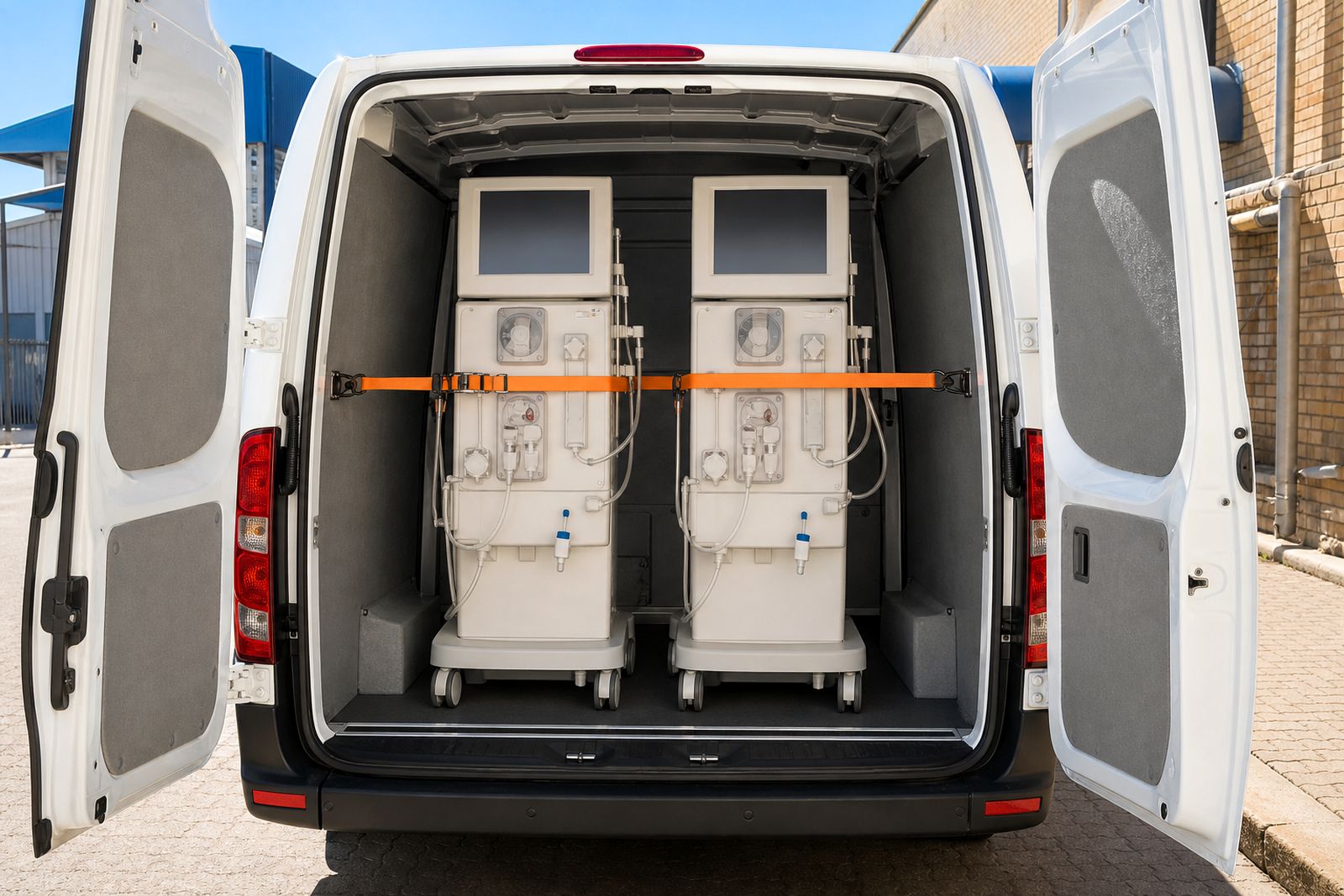
Use this guide to get your renal unit, clinic or hospital ready before refurbished dialysis machines arrive. A few checks before delivery helps the hand-over go faster and avoids delays on the day.
Confirm the delivery plan early
Before the machine leaves Kempton Park, make sure your facility has confirmed who will receive it, where it must be offloaded and which area it will be installed in. This is especially important for larger hospitals where receiving, security and the renal unit may all follow different procedures. If your site is near OR Tambo flight routes, in a busy city precinct or inside a campus with restricted vehicle access, note that in advance.
It helps to nominate one contact from facilities or unit operations and one contact from the clinical side for the day of delivery. That keeps sign-in, access and hand-over moving without long waits. If your site has specific booking slots for deliveries, municipal loading restrictions, or basement clearance limits, share those details before dispatch.
- Confirm the exact delivery address and unit location.
- Advise whether access is through a loading bay, reception or service entrance.
- Arrange site access cards, gate codes or visitor sign-in requirements.
- Nominate the person who will sign for delivery and attend the technician hand-over.
- Flag any restricted delivery hours, public holiday closures or weekend rules.
Check space, access and floor route
One of the most common delays is not the machine itself but the route from the vehicle to the treatment area. Walk the route before delivery and look at every doorway, passage, ramp and lift. Remove loose trolleys, bins and boxed stock that can narrow the path. If the machine must go to an upper floor, confirm the lift is working and that the internal size is suitable for equipment movement.
In older buildings, door frames can be tighter than expected and corridors may have sharp turns. In coastal towns, where passages sometimes double as storage during humid weather, clear the route properly on the morning of delivery. A short route check can save a full reschedule which no unit wants.
- Measure narrow doorways, passages and lift openings if access is tight.
- Check the floor route for steps, steep ramps and slippery surfaces.
- Reserve parking close to the offload point where possible.
- Clear the treatment area so the machine can be positioned safely.
- If porters or internal movers are required by your facility, book them in advance.
Prepare power and room services
The installation area must have stable power available on arrival. If your facility uses backup supply during power cuts, confirm the treatment room circuits are on the correct line and that the relevant plugs are live. Do not wait until the machine is on site to discover a tripped breaker, overloaded socket line or locked plant room.
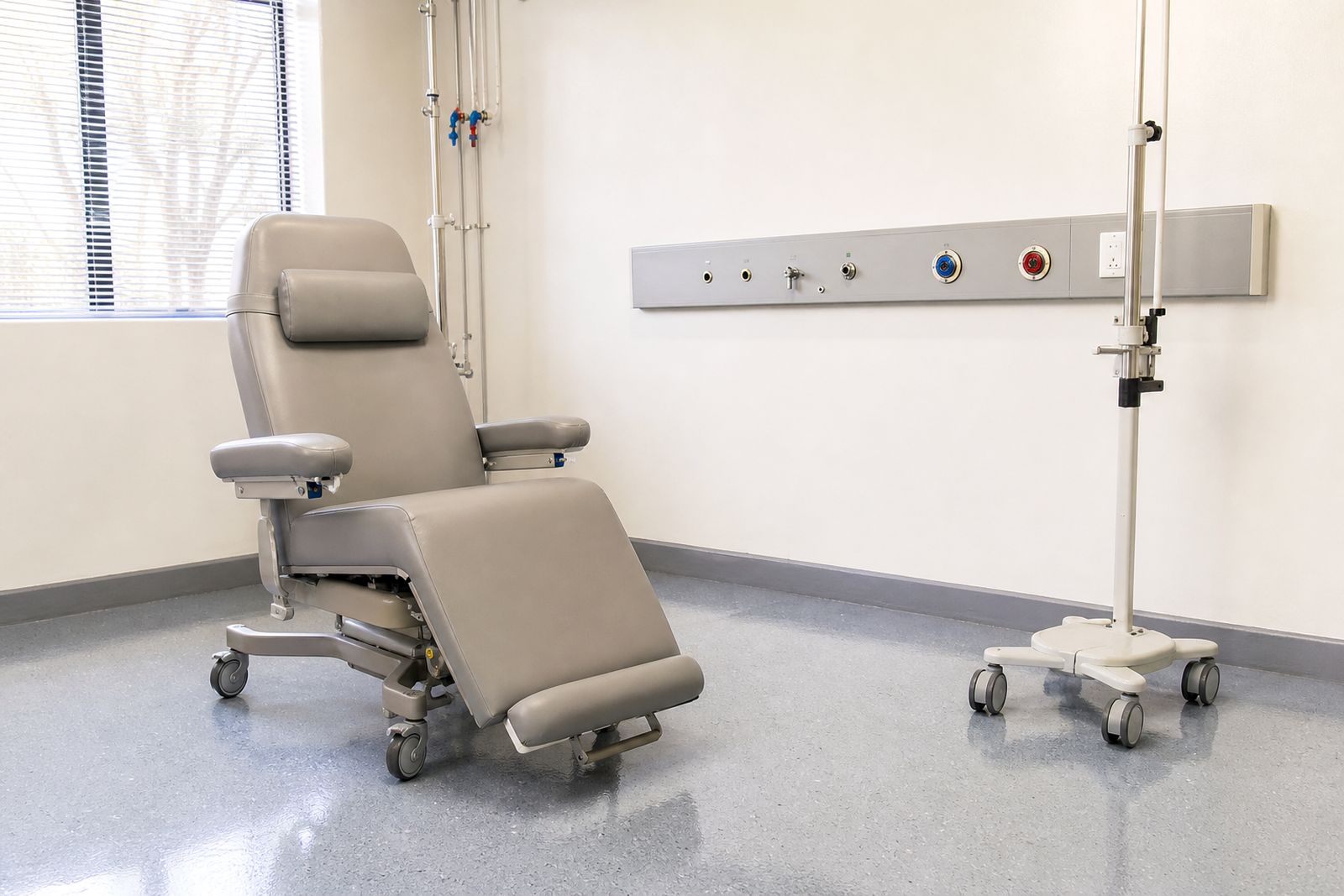
Also check the room environment. The machine should go into a clean, dry and accessible area with enough working space around it for setup and future service visits. Avoid placing incoming equipment where it blocks emergency paths, handwash points or cupboard access. If your site follows internal engineering sign-off before equipment is energised, arrange that ahead of time.
- Confirm the intended power point is working and accessible.
- Check that backup power arrangements are in place if used by your facility.
- Keep extension leads and temporary adapters out of the plan unless your engineering team has approved them.
- Make sure there is enough space around the machine for safe positioning and inspection.
- Tell us beforehand if site engineering must be present during delivery.
Have your receiving paperwork ready
Registered facilities often need internal paperwork completed before equipment can move from receiving into the unit. Prepare those steps before the vehicle arrives. That may include purchase order references, rental authorisation, asset intake forms, goods received notes or internal booking references. If your procurement team is off site, have a local contact ready in case receiving asks for confirmation.
Each machine is supplied with its service history and a technician hand-over at the facility. Decide where those records will be stored and who in your team will be responsible for filing them. Some units keep a physical file in the equipment room, others scan everything into their maintenance system. Either approach is fine as long as the documents do not sit in reception for two days, which does happen now and then.
- Prepare your internal reference numbers and receiving documents.
- Nominate who will file the service history paperwork.
- Ensure the hand-over attendee can sign where required by your facility.
- Advise security or stores that the machine is expected.
Plan your technician hand-over attendance
The hand-over is not just a delivery signature. It is the point where the receiving facility checks the machine, confirms the paperwork and receives practical operating and support information relevant to the equipment hand-over. For that reason, the right people should be present. Usually that means a unit representative and the relevant facilities or technical contact.
Try not to schedule the hand-over during a shift change, ward round congestion or when your engineering contact is in another building. A short, focused session on arrival usually prevents confusion later. If the machine is being added to a busy renal unit with limited floor space, have the final position agreed before our technician arrives so there is no debate in the doorway.
- Book the hand-over time with the unit representative.
- Make sure the technical or facilities contact is available if your site requires this.
- Confirm the final room and placement position before arrival.
- Keep the receiving area informed so the machine is not left waiting unattended.
Final day-of-delivery checklist
On the morning of delivery, do one last walkthrough. Check that the access route is open, the room is ready and the receiving contact is reachable. Small issues on the day can create long delays, especially at larger campuses in Johannesburg, Pretoria, Durban, Cape Town or Gqeberha where security and internal transport can take longer than expected.
If anything has changed since booking, such as lift failure, a blocked loading bay or maintenance work in the corridor, send the update through your contact form enquiry as early as possible. That gives us time to plan around it. A simple heads-up helps a lot, and avoids the machine arriving to a locked door.
- Access route clear and unlocked.
- Receiving contact on site and aware of the ETA.
- Delivery bay or parking space available.
- Room prepared and power checked.
- Paperwork references ready.
- Hand-over attendees available.
If you are still unsure whether your site is ready, use the enquiry form on our contact page and we can confirm the practical points before dispatch.
What our Dialysis Machine customers say
Verified Google reviews
Questions we get asked
Who should be present when the machine is delivered?
At minimum, the facility should have an authorised receiving contact and the person attending the technician hand-over. Many sites also require a facilities or engineering representative.
Can machines be delivered to a home or private address?
No. We supply registered facilities only, including renal units, clinics and hospitals, and never to the public.
What documents come with the machine?
Each machine goes out with its service history, and the facility receives a technician hand-over together with ongoing parts support after delivery.
Also worth a look

Ask about a machine
Send a note through our contact form with your facility, how many machines you need and whether you want to buy, rent or trade in, and our sales team will contact you.
Open the contact form