Service history files
Every refurbished machine we place with a registered facility is supplied with a service history file. This gives your unit, hospital or clinic a clear record of work completed before delivery and a practical reference for future servicing.
What is included in the service history file
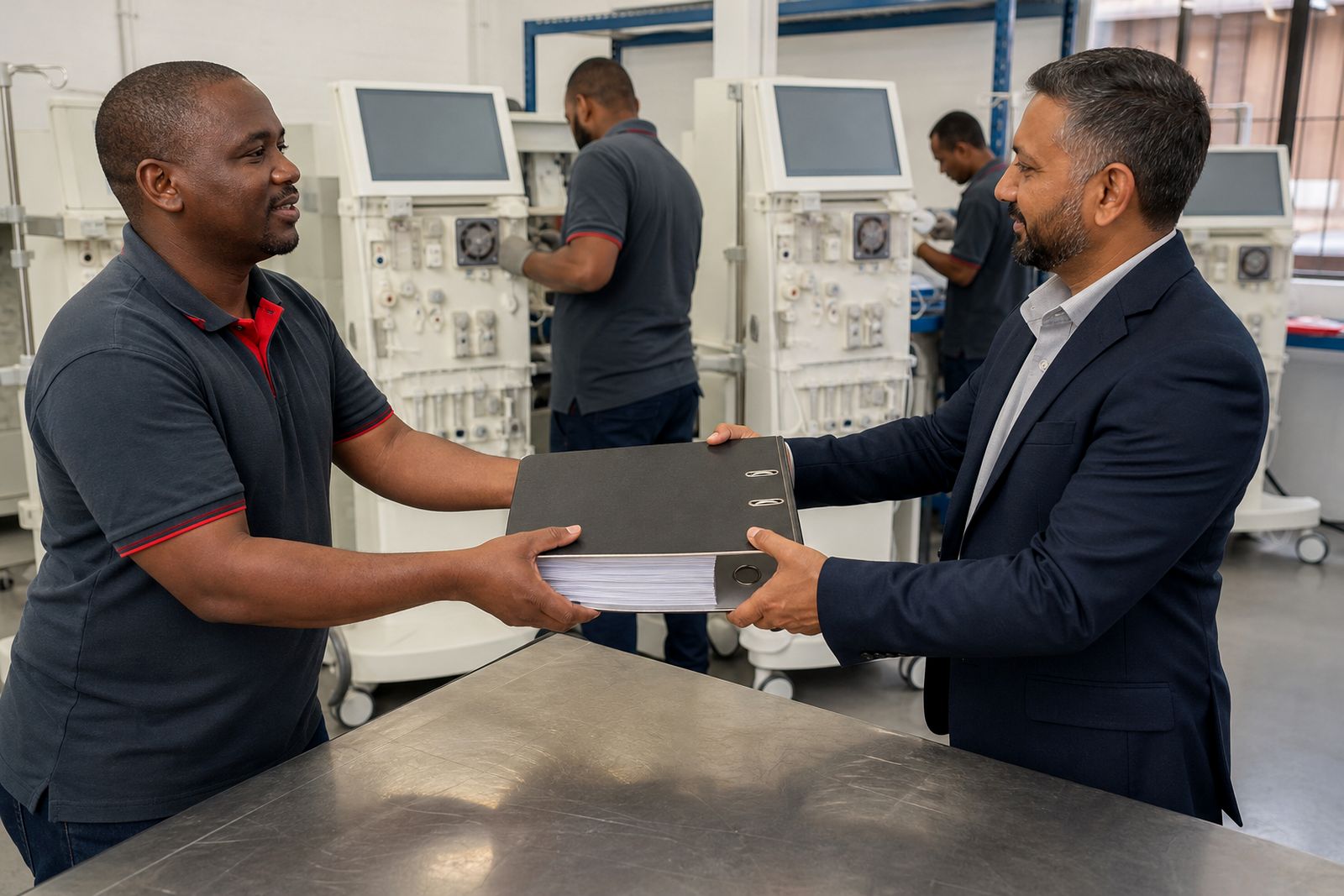
The service history file is the working record that travels with the machine when it leaves our Kempton Park base for installation at your facility. It is prepared for registered renal units, hospitals and clinics only, and it helps your technical and procurement teams see what has been checked, serviced and recorded before hand-over.
The exact contents can differ slightly from one machine to the next depending on its prior service record and the work completed during refurbishment, but every file is built to give your facility a clear maintenance trail. It is meant for equipment management and service planning, not for clinical use.
- Machine identification details and internal asset references
- Available prior service records received with the unit
- Workshop inspection notes from intake
- Service and replacement work completed during refurbishment
- Functional test records completed before dispatch
- Consumable or wear items changed as part of the process where applicable
- Technician hand-over record completed at your site
- Guidance on ordering future parts and booking support
How the file is built step by step
We start the service history file as soon as a machine enters our process. First, the unit is booked in and any service documents received with it are matched to the serial and asset information. The workshop team then carries out an intake inspection and records the machine condition as received.
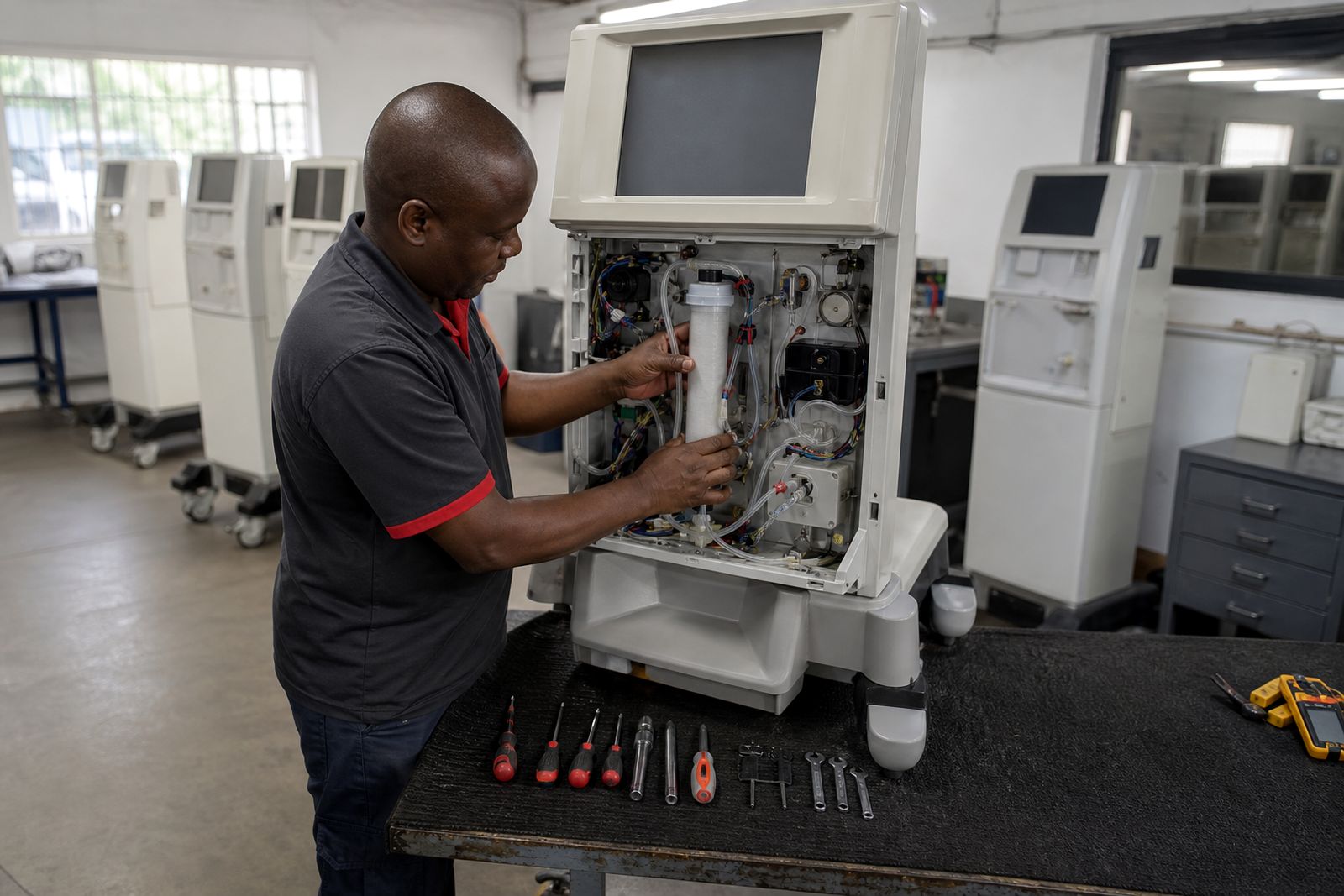
From there the refurbishment work is documented as it happens. If components are replaced, if assemblies are cleaned or if specific faults are corrected, those actions are added to the file. Once the workshop stage is complete, the machine goes through testing and preparation for delivery. Those results are then added before dispatch.
After the machine arrives at your facility, the service technician completes the hand-over with your appointed staff member and confirms the installation record. That final step closes the first issue of the file and gives your team a starting point for future maintenance.
- Booking in and identity check
- Collection of available prior records
- Intake inspection and condition notes
- Refurbishment work logged during workshop stages
- Testing and dispatch preparation recorded
- On-site hand-over signed off at the facility
What your facility should prepare
To keep hand-over straightforward, your facility should have one responsible contact available on the day of delivery and installation. This can be a unit manager, technical services contact, biomedical representative or another authorised staff member. That person should be able to receive the file, confirm machine placement and keep the records within your site equipment system.
Please also make sure there is suitable access for delivery into the unit, including lifts, passages and loading areas where needed. In some sites around Johannesburg, Pretoria, Durban and Cape Town, access rules for contractors can slow things down if they are not arranged in advance. If your site has strict booking times, security clearance requirements or municipal service interruptions, let us know early so the install is planned properly.
- A named facility contact for receipt and hand-over
- Site access arranged for delivery staff and equipment movement
- A prepared installation area with power available
- Your internal asset or equipment reference if you want it noted
- A filing point for the service record so it remains with the machine
If your facility works in a coastal area where humidity and salt air affect equipment rooms, mention that during planning. It helps the technician note the installation environment and discuss practical service intervals with your team.
How pricing is worked out in general terms
We do not use a one-size-fits-all figure for refurbished machines because the work behind each unit can differ. Pricing is generally based on the condition of the machine received into stock, the extent of workshop work required, the parts fitted during refurbishment, testing completed, and the delivery and installation scope to your facility.
The service history file forms part of that value because it records the work done and supports traceability after hand-over. Rental and trade-in arrangements are also assessed individually, especially where transport distances, collection logistics or the starting condition of the machine affect the amount of workshop time needed. For this reason, facilities should send an enquiry through our contact page with the site location and the type of requirement so we can respond accurately.
We do not publish machine ages, stock counts or patient-related details, and we do not sell to the public. All supply is handled facility to facility.
Aftercare and ongoing record keeping
Once your machine has been delivered and handed over, the service history file should stay with your equipment records and be updated whenever work is carried out. This makes future servicing easier and helps your team track parts support over time. If your unit has several machines, a consistent filing method saves time later, specially when technical staff change or machines move between rooms.
Our support does not stop at delivery. Registered facilities can contact us through the enquiry form to request parts support, service-related assistance and guidance on the next steps for machine maintenance planning. When you refer to the machine identification details in the file, it speeds up the process and reduces back and forth.
- Keep the file stored with your equipment documentation
- Record each future service event against the same machine reference
- Use the file when ordering parts or requesting support
- Note site moves or placement changes internally
- Present the file to authorised technical staff when needed
Why facilities ask for this record
For hospitals, clinics and renal units, a proper service file gives practical day to day value. It supports internal control, provides continuity between workshop and site teams, and gives your staff one place to check what work has already been completed before arranging further service. It also helps with receiving procedures when procurement, technical and operational staff all need the same information.
Because every machine includes a technician hand-over and parts support, the file is not just paperwork. It is the reference point linking refurbishment, delivery, installation and aftercare. That is why we include it with every refurbished machine supplied to a registered facility across South Africa.
What our Dialysis Machine customers say
Verified Google reviews
Questions we get asked
Does every refurbished machine come with a service history file?
Yes. Every refurbished machine supplied by us to a registered facility includes a service history file together with technician hand-over and ongoing parts support.
Can you send the file before delivery?
Facilities can ask about documentation during the enquiry process, but the completed service file is issued as part of the machine hand-over once refurbishment, testing and dispatch preparation have been finalised.
Do you sell machines to home users or the general public?
No. We supply registered facilities only, including renal units, hospitals and clinics.
Also worth a look
Ask about a machine
Send a note through our contact form with your facility, how many machines you need and whether you want to buy, rent or trade in, and our sales team will contact you.
Open the contact form