Collection and data wiping
When a facility trades in older dialysis machines, collection needs to be orderly, documented and practical. We arrange uplift from registered facilities, clear stored machine data, and prepare each unit for assessment or parts support.
What is included in collection and data wiping
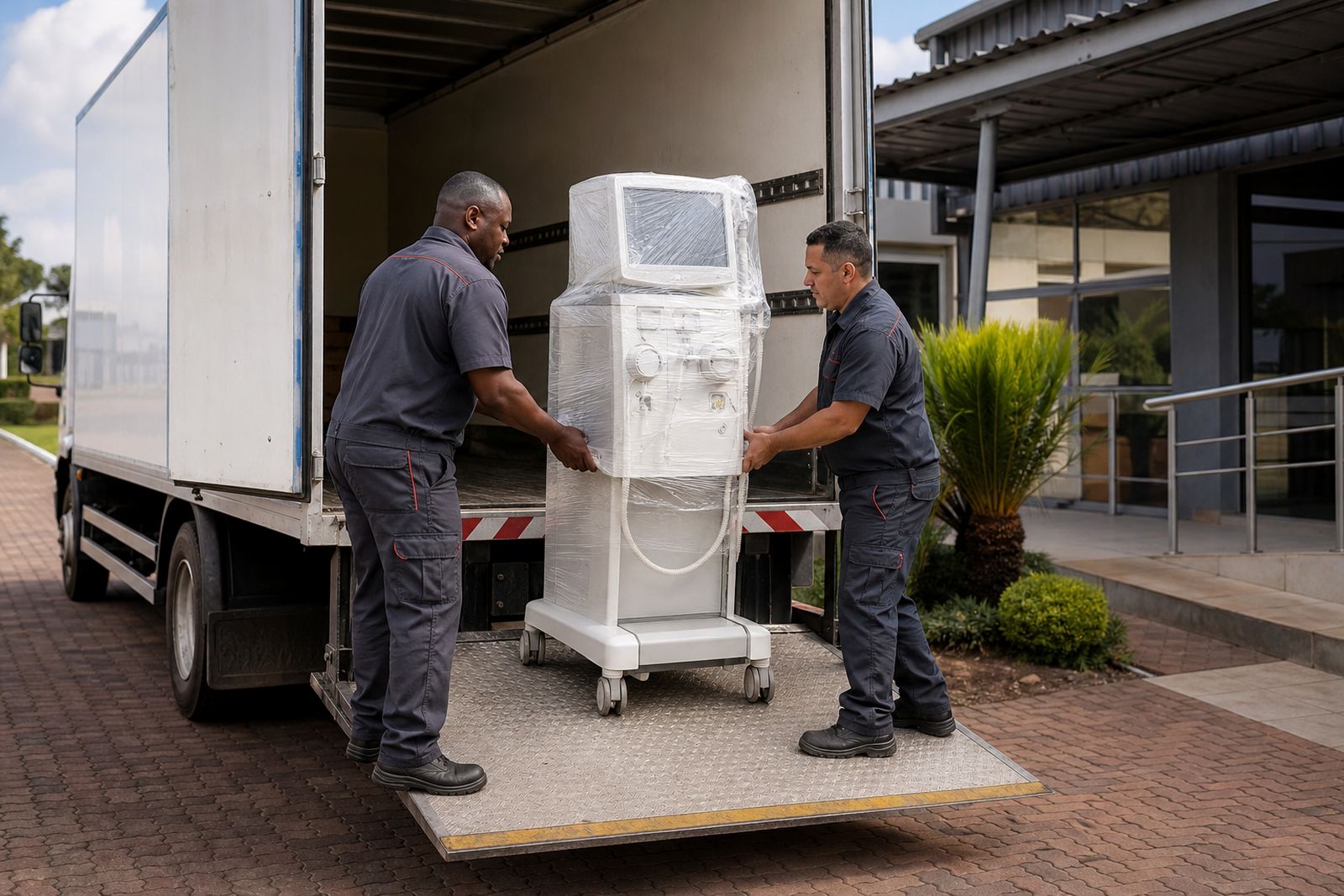
Our trade-in collection service is for registered facilities only. We collect the machine from your renal unit, clinic or hospital, record the handover, and clear stored operational data from the unit as part of intake. This is handled as a technical process, not a clinical one, and it forms part of the trade-in route before valuation is finalised.
The service is set up to limit disruption on site. Collection is arranged in advance, with access details confirmed beforehand so the technician or driver is not delayed at receiving bays, basement loading areas or security checkpoints. In busy sites around Kempton Park and near OR Tambo, timing matters because loading zones can be tight and vehicle access can change during the day.
- Pre-collection booking with site access confirmation
- Machine identification against your handover list
- Careful uplift from the treatment or storage area
- Basic external condition check at collection
- Recorded transfer into our intake process
- Stored machine data clearing as part of intake
How the collection process works step by step
Once your facility submits an enquiry through our contact page, we confirm that the machine is being offered by a registered facility and not by a private seller. We then ask for a short list of details so collection can be planned properly. That normally includes the town, floor level, lift access, whether the machine is already decommissioned, and whether there are loose accessories packed with it.
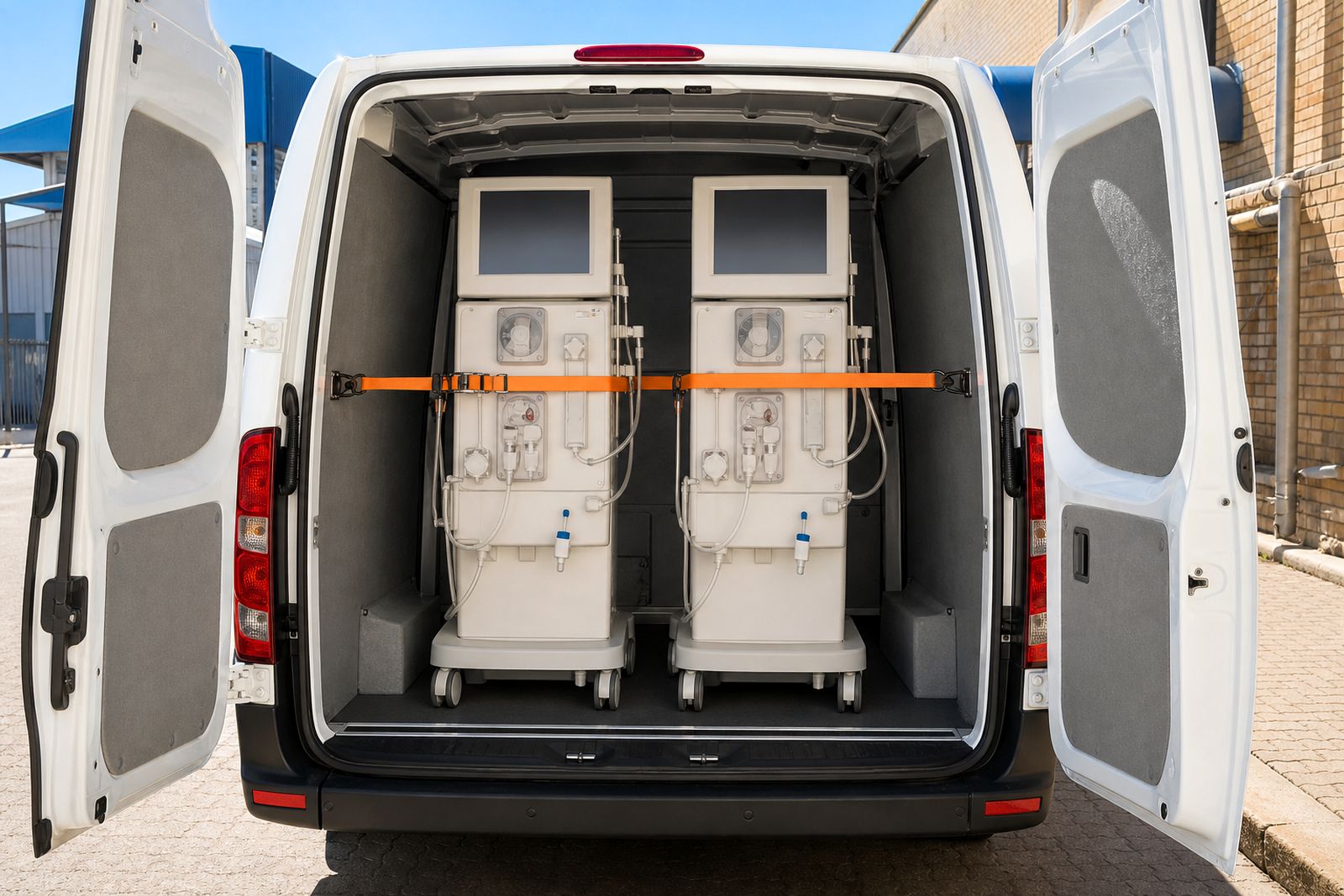
On the agreed day, the collection team arrives with suitable packing materials and handling equipment for safe movement through passages, lifts and loading zones. If the machine is in a coastal area, we also note visible corrosion or salt exposure during intake because this can affect parts recovery and the general trade-in outcome. After uplift, the machine is booked into intake and its stored data is cleared before the technical evaluation continues.
- Enquiry and facility verification
- Collection planning and access check
- On-site handover and serial verification
- Safe removal and transport preparation
- Arrival at intake and logging
- Stored data clearing and file update
What your facility should prepare before uplift
A smoother collection starts with the machine being ready to move. The facility should ensure internal procedures for decommissioning have been completed, and that the unit is released for pickup by the responsible department. Our team does not take over your internal sign-off process, so it helps if the operator or unit administrator has already cleared the machine for removal.
Please make sure the path from the machine location to the loading point is open and that any site security requirements are known in advance. If your site has restricted collection windows, public hospital delivery bays, parking limits, or municipal vehicle rules in dense urban areas, tell us early so we can plan around them. A little prep saves a lot of time on the day.
- Confirm the machine is ready for removal
- Provide the exact collection address and department
- Advise on stairs, ramps, lifts or narrow passages
- Set aside loose items that belong with the machine
- Have your internal handover reference ready
- Confirm who will sign at release
How data wiping is handled
Trade-in machines can hold stored operational records, configuration information and service-related logs. As part of our intake procedure, that stored data is cleared from the machine before it moves further into assessment or refurbishment routing. This is done to support responsible handover from one registered facility to the next stage in the machine lifecycle.
Where the machine includes removable storage elements or printouts held with the unit, these are checked during intake and dealt with according to the handover scope. Our process focuses on machine-held information and associated technical records. We do not provide clinical interpretation, patient advice or treatment guidance at any stage. If your facility has internal record-retention rules, flag them before collection so the right items stay on site and the right items travel with the machine.
How trade-in pricing is worked out
We do not give a flat trade-in figure without seeing the machine details and understanding the collection conditions. The general value depends on the unit's physical condition, completeness, visible wear, service record availability, storage conditions, transport complexity and whether the machine is suitable for refurbishment or mainly useful for parts support. Collection distance and access can also affect the overall trade-in calculation.
A machine collected from a ground-floor unit in Gauteng with clear service paperwork and easy loading will usually be simpler to process than one in a remote area with missing covers, heavy corrosion or difficult building access. Units exposed to repeated power cuts without proper shutdown history may also need closer inspection. We explain the pricing basis in practical terms so the facility understands how the trade-in outcome was reached, even if the machine is not suitable for the same route you first expected.
Aftercare and records after collection
After uplift, the machine is tracked through intake and assessment, and the collection record forms part of the trade-in file. If the machine proceeds into refurbishment routing, the service history file and technical notes are updated as applicable. If it is better suited for parts support, that is recorded internally so recoverable components can be handled correctly.
Facilities often ask what happens after the vehicle leaves site. In simple terms, the machine is not just moved and forgotten. It is logged, cleared, reviewed and routed according to condition and support value. If your team needs a clear collection trail for internal asset administration we can align the handover paperwork with the trade-in process, provided the scope is agreed upfront.
For facilities across South Africa, this gives a cleaner handover from old unit to next step with less back-and-forth later on.
What our Dialysis Machine customers say
Verified Google reviews
Questions we get asked
Do you collect from private sellers or home users?
No. We only collect trade-in machines from registered facilities such as renal units, clinics and hospitals.
Must the machine be disconnected before collection?
Your facility should complete its own internal decommissioning and release steps before uplift. Tell us the machine status when you send the enquiry so collection can be planned properly.
Can you give a trade-in value before collection?
We can discuss the factors that affect value, but the trade-in outcome depends on condition, completeness, records, access, transport and what the machine is suitable for after intake.
Also worth a look
Ask about a machine
Send a note through our contact form with your facility, how many machines you need and whether you want to buy, rent or trade in, and our sales team will contact you.
Open the contact form